Don't miss our holiday offer - up to 50% OFF!

Silicone Breast Form vs. Other Breast Prosthetics 2026 – Comprehensive Comparison

Introduction to Breast Prosthetics: Why Comparison Matters
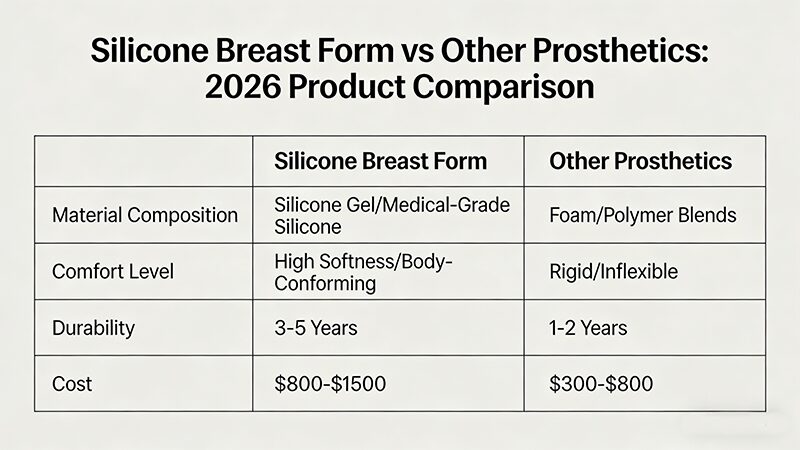
Individuals seeking breast prosthetics have a range of options, including silicone breast forms, foam padding, cotton breastplates, and latex breast forms. Each type of prosthetic offers distinct advantages and disadvantages, making it essential to compare them based on key criteria—realism, comfort, durability, maintenance, and cost—to make an informed decision. This comprehensive comparison focuses on silicone breast forms, the most popular option, and contrasts them with other common breast prosthetics, providing evidence-based insights to help users select the best device for their needs. The comparison is grounded in material science, user experience, and professional expertise, ensuring objectivity and relevance.
The primary goal of this comparison is to demystify the differences between breast prosthetics, helping users understand why silicone breast forms are preferred by many, and in which scenarios other options may be more suitable. Key criteria for comparison include realism (texture, weight, appearance), comfort (breathability, fit, wear duration), durability (lifespan, resistance to damage), maintenance requirements, cost, and versatility (compatibility with different clothing styles).
Silicone Breast Form vs. Foam Padding
Foam padding is one of the most affordable and accessible breast prosthetics, but it differs significantly from silicone breast forms in terms of realism and durability. Silicone breast forms are fabricated from medical-grade silicone, which replicates the texture, weight, and movement of natural breast tissue, offering unmatched realism. Foam padding, by contrast, is lightweight but lacks the weight and texture of natural breast tissue, resulting in a flat, unnatural appearance—particularly under form-fitting clothing.
Comfort-wise, foam padding is breathable but less durable, as it can flatten and lose shape over time with regular use. Silicone breast forms are more comfortable for extended wear, as they conform to the body and do not shift or bunch. Maintenance requirements also differ: foam padding is machine-washable and low-maintenance, while silicone breast forms require gentle hand washing and careful storage. Cost-wise, foam padding is significantly cheaper than silicone breast forms, but it has a shorter lifespan, making it less cost-effective in the long run. Silicone breast forms are superior for users seeking realism and durability, while foam padding is suitable for occasional use or those on a tight budget.
Silicone Breast Form vs. Cotton Breastplate
Cotton breastplates are another common alternative to silicone breast forms, designed for comfort and simplicity. Like foam padding, cotton breastplates are lightweight and breathable, but they lack the realism of silicone breast forms. Cotton breastplates are filled with soft cotton or foam, offering a subtle silhouette but no realistic texture or weight. This makes them suitable for casual wear but less ideal for users seeking a natural appearance.
Durability is a key difference: cotton breastplates can shrink, fade, or lose shape after repeated washing, while silicone breast forms, with proper care, can last 8–12 months or longer. Comfort-wise, cotton breastplates are breathable but may shift during movement, requiring frequent adjustments. Silicone breast forms, particularly adhesive or pocket bra-compatible models, offer secure placement with minimal shifting. Versatility is another factor: silicone breast forms are compatible with a wider range of clothing styles, including strapless and low-neck garments, while cotton breastplates often have straps that limit clothing options. Silicone breast forms are preferred for users seeking realism and versatility, while cotton breastplates are suitable for casual, low-key use.
Silicone Breast Form vs. Latex Breast Form
Latex breast forms are less common than silicone but offer some similarities in realism. Latex is a flexible material that can mimic the texture of natural breast tissue, but it is less durable than silicone and more prone to tearing or degradation. Additionally, latex can cause skin irritation in individuals with latex allergies, making it unsuitable for a significant portion of users. Silicone breast forms, by contrast, are hypoallergenic and compatible with most skin types.
Comfort-wise, latex breast forms are lightweight but less breathable than silicone, making them less suitable for extended wear. Silicone breast forms offer better weight distribution and conform to the body more naturally, enhancing comfort. Maintenance requirements are similar—both require gentle cleaning—but latex breast forms have a shorter lifespan, typically 3–6 months with regular use. Cost-wise, latex breast forms are slightly cheaper than silicone but less cost-effective due to their shorter lifespan. Silicone breast forms are superior for users seeking durability, hypoallergenic properties, and long-term comfort.
Final Comparison: Which Breast Prosthetic Is Right for You?
In summary, silicone breast forms outperform other breast prosthetics in terms of realism, durability, and versatility, making them the preferred choice for most users. Foam padding and cotton breastplates are suitable for occasional use or those on a budget, while latex breast forms are limited by their allergenic properties and shorter lifespan. The choice ultimately depends on the user’s needs: if realism, durability, and comfort are priorities, silicone breast forms are the best option. For casual, low-key use or budget constraints, foam padding or cotton breastplates may be more suitable. By understanding the differences outlined in this comparison, users can make an informed decision that aligns with their preferences and lifestyle.